
THE SUPERB AND UNEXPECTED ON EVERY PAGE

STAY CONNECTED


WEALTH
THE RUNWAY PREMIUM
NO ONE IS PRICING IN
As private aviation increasingly shapes how
affluent buyers move, live, and invest, aviationadjacent
real estate is emerging as one of luxury
real estate’s most overlooked and undervalued
asset classes—for now.
REGINA RUSSO
.jpg)
Luxury real estate is entering a new era, one less defined by visible extravagance and increasingly shaped by how efficiently life itself operates. The modern affluent buyer is no longer simply purchasing a residence. They are purchasing a system designed around movement.
That shift is quietly transforming a category of real estate once viewed as niche: aviation communities.
What was traditionally associated with pilots and aircraft owners has evolved into something far broader and culturally significant. Across the United States and internationally, luxury fly in communities are emerging as highly specialized ecosystems where private aviation, hospitality, recreation, and lifestyle merge into a seamless daily experience. The runway itself has become an amenity.
Increasingly, affluent buyers are measuring luxury not in miles, but in friction.
How quickly can they move from residence to aircraft? How efficiently can they leave New York for Palm Beach, Aspen, Nassau, Telluride, or Saint Tropez without surrendering hours to commercial terminals, delays, congestion, and security lines? How easily can entrepreneurs, investors, athletes, entertainers, and globally mobile families transition between residences, obligations, and time zones?
The answers are beginning to shape where they buy.
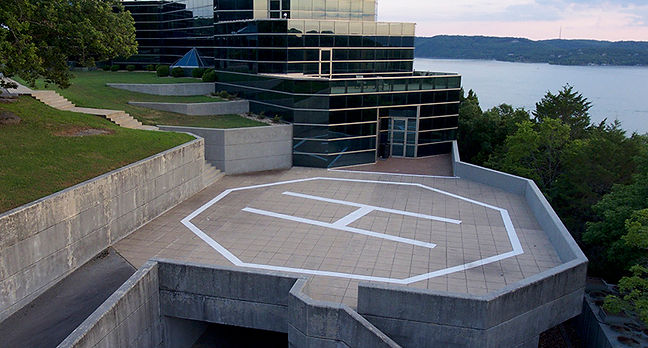.jpg)
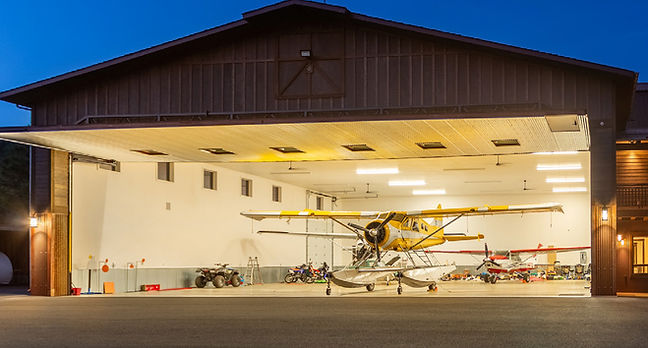
Within today’s aviation communities, homes are no longer designed simply around views or interior finishes. They are built around movement itself. Private hangars have evolved into architectural extensions of the residence, functioning as collector garages, lounges, wellness spaces, galleries, entertainment venues, and private social environments. Taxiways replace suburban streets. Aircraft sit steps from the living room.
For many residents, the appeal extends well beyond aviation itself. It represents control.
Unlike traditional gated communities, aviation developments are fundamentally organized around autonomy and efficiency. Owners are not simply purchasing property. They are reducing interruption. The emotional luxury lies in the ability to depart privately for a business meeting, a ski weekend, an equestrian competition, or a spontaneous family getaway without navigating the friction increasingly associated with modern travel.
The psychology behind that shift is powerful.
There is a romance attached to aviation communities that traditional luxury developments often struggle to replicate. Early morning departures from a private runway. Sunset flights across coastlines and mountain ranges. The quiet rhythm of neighborhoods built around shared passion, independence, and mobility. In many ways, today’s luxury airparks function more like modern yacht clubs or equestrian enclaves than conventional residential developments.
.jpg)
That crossover is becoming especially visible in South Florida, where private aviation and equestrian wealth are increasingly intersecting.
In Wellington Aero Club, aviation centered living has evolved into one of the region’s most distinctive luxury niches. Positioned within one of the world’s most influential equestrian destinations, the community attracts affluent residents seeking seamless movement between private aviation and Wellington’s internationally recognized competition circuit.
Dunai Johnsson believes the appeal extends well beyond traditional aviation buyers.
“Wellington Aero Club is the premier flying community in South Florida, particularly within Palm Beach County,” says Johnsson. “Wellington is also the top winter equestrian destination internationally. The Winter Equestrian Festival and Global Dressage Festival are golf cart distance from the Aero Club, creating a very unique niche clientele of affluent equestrian families who prefer to fly privately.”
The Wellington Aero Club centers around a 4,000-foot paved and lit runway capable of accommodating light jets. This creates the ability for residents to fly nonstop directly between major cities such as New York and Boston straight into Palm Beach County. The community also maintains its own fuel farm where residents can purchase fuel at substantially lower costs than many surrounding airports, making private travel not only more convenient, but significantly more efficient.
For owner flown aircraft, convenience itself often changes flying behavior. Residents frequently find themselves flying more often simply because the runway exists within the neighborhood. Shared aviation interests among neighbors create a uniquely social environment where spontaneous breakfast flights, weekend trips, and the classic “$100 Hamburger” at airpark restaurants such as Volanti at Scottsdale Airport become part of daily life. Hopping into an aircraft for lunch with a friend becomes as seamless as getting into a car.
The community reflects a broader evolution occurring throughout luxury real estate itself. Increasingly, affluent buyers are prioritizing integrated lifestyle ecosystems built around mobility, efficiency, and proximity to the experiences shaping their lives.
Luxury developers are increasingly responding to this shift by integrating private aviation directly into the residential experience itself. What was once considered an added convenience is becoming a defining luxury amenity.
The tarmac is becoming the new lobby.
With ongoing TSA delays, commercial congestion, and rising demand for efficiency among globally mobile buyers, a growing number of developments are designing seamless transitions between aircraft, residence, and destination into the ownership experience itself. From on demand helicopter transfers to runway to residence concierge coordination, these sky first properties are reshaping how affluent travelers think about arrival.
.jpg)
.jpg)
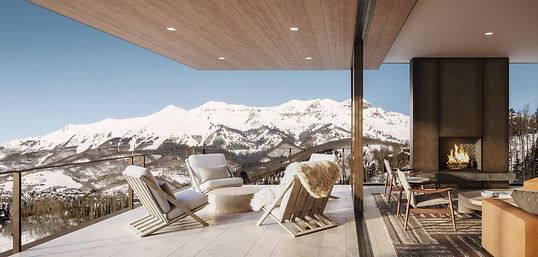
Set to debut in 2028, Four Seasons Resort and Residences Telluride will bring the brand’s signature service to one of the nation’s most exclusive mountain destinations, offering private aviation arrivals a seamless journey from runway to residence to ski slope in a matter of minutes. Photo By: Hayes
Many of these newer communities are moving beyond simple runway access, incorporating hospitality driven amenities directly into the ownership experience. Private restaurants, wellness facilities, spas, clubhouses, and curated social environments are becoming part of the broader aviation lifestyle, reflecting how affluent buyers increasingly expect the same level of service and experience found within luxury resorts.
The appeal extends well beyond convenience alone. Increasingly, globally mobile buyers are assembling portfolios of seasonal residences connected through private aviation infrastructure, allowing transitions between homes, climates, and business hubs to occur with remarkable efficiency. The runway is no longer simply transportation infrastructure. It is becoming part of the luxury experience itself.
In the Mountain West, aviation driven markets throughout Idaho, Montana, Wyoming, and Colorado are evolving into some of the country’s most desirable hybrid lifestyle investments. Buyers are drawn not only to outdoor recreation and privacy, but to the ability to move efficiently between markets without relying heavily on commercial travel infrastructure.
Sun Valley offers one of the clearest examples of how aviation and luxury real estate now intersect. Each summer, the region transforms into one of the country’s most concentrated private aviation corridors as leaders from technology, finance, media, and investment converge for the annual conference. The surrounding real estate market increasingly reflects that movement pattern.
The same dynamic continues throughout The Hamptons during peak summer months, fueled by constant helicopter and private jet traffic moving between Manhattan, South Florida, Europe, and the Northeast corridor.
Internationally, the pattern repeats itself throughout the Caribbean, the South of France, Sardinia, and select global resort markets where affluent buyers increasingly evaluate homes not simply by scenery, but by ease of arrival, departure, and overall mobility integration.
Importantly, this evolution is not limited to aircraft owners alone. Charter memberships, fractional ownership, and expanding private aviation networks have widened the category of buyers structuring their lifestyles around aviation accessibility. Many may never own an aircraft outright yet still prioritize proximity to private aviation infrastructure with the same seriousness once reserved for waterfronts or golf communities.
That distinction matters.
Because the true luxury being purchased today is increasingly invisible.
Privacy. Time. Flexibility. Efficiency. Freedom from interruption.
The ability to move globally, seasonally, and spontaneously without friction has become one of the defining luxuries of modern wealth. And the communities built around that reality may represent one of the most undervalued categories in luxury real estate today.